il
Francesco Jodice
Tosetti Value, Turin
March - July 2020
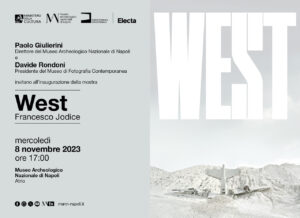
In the year of the US presidential election, "Perspectives. The economy of images "presents for the first time in Italy WEST project in progress by Francesco Jodice. Among monumental geological formations and symbols of Western civilization, the exhibition traces the main stages of the iconographic map traced by the artist and reveals the construction mechanisms of the American imagination. In her four journeys across the great West, Jodice condenses the "Rise and Fall" of the American century, a story between the beginning of the Gold Rush and the collapse of the financial system in 2008.
The series takes its cue from two events that marked the first decade of the new millennium: the attack on the twin towers in 2001 and the collapse of Lehman in 2008, with their burden of suffering and worries about the very future of the American model. Francesco Jodice takes his cue from these two dramatic events and their political, economic, cultural and social consequences for a personal reinterpretation of the reality and imagination of the United States.
West is an observation platform on the last great Western empire. Here we investigate the events and postulates of American history from the great rise of the gold rush to the recent financial catastrophe of 2008. "49ers" and white-collar workers are the main protagonists of the initial and final phases of this parable, populated by an endless theory of characters useful to tell its splendors and aberrations, from cowboys to Indians, from rock stars to actors, passing through explorers, gangsters, bodybuilders, intellectuals, artists, presidents and astronauts.
The American West, from the Pacific coast to the deserts, is the privileged terrain of this investigation. Jodice walks through it and photographs it, finding traces of a majestic geological antiquity (the Western Plateau is among the oldest plates to emerge on the planet) and those of the most recent colonizations (the crash of the Lehman Brothers, Hollywood, NASA, western films, militarization), specter of some of the most bitter contemporary contradictions.
All this is West: a journey to the end of the heroic epic of liberalism; a manual for reading and understanding the American 'long century' and a look forward to the era of post-Fordism and the post-West.
FutuRuins. Il corpo e la pietra
il
Francesco Jodice
Museo Fortuny, Venice
December 19, 2019 - March 24 2020
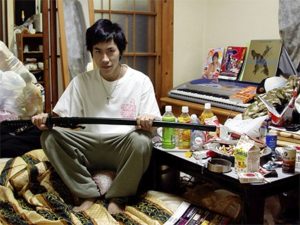
The aesthetics of the ruins is a crucial element in the history of Western civilization: it symbolizes the presence of the past, but at the same time it contains within itself the potential of the fragment. The ruin, in fact, is never neutral: contested between nature and culture, suspended between destruction and reconstruction, it is immersed in the flow of time and at the same time is stretched towards eternity. It comes from the past, it gives a richness of meaning to the present, it gives awareness to future projects.
Chronologically, the exhibition will try to range over the centuries for salient points, in order to give an idea of the historical complexity of the concept: from the first mythologies of destruction, the effect of divine wrath (the Tower of Babel, Sodom and Gomorrah ...), up to Palmyra's “iconoclastic terrorism”, including ancient Egypt, Greco-Roman antiquity, the “instauratio Romae”, the “ruine du Louvre”, the war destruction of the last century, the rubble of the Twin Towers.
The collapse of the architecture evokes the decadence of the civilization that produced them, so the parallel building-body is the revealing element that, if on the one hand it refers to the transience of human life and to the corruption of bodies, on the other it opens to the concept of cyclicality: alternating in the history of crisis and rebirth.
Even today, the contemplation of the ruins can be a source of new awareness for those who exercise their memory on the one hand and planning on the other.
Il Corsaro Nero e la vendetta dei Gavi
il
Francesco Jodice
Forte del Gavi, Gavi (AL)
May 30 - September 7, 2019
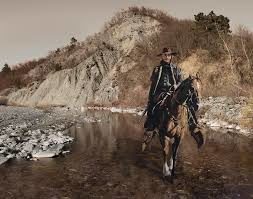
The Black Corsair and the revenge of Gavi was born from a year of research by Francesco Jodice on the landscape, the cultural and social history of Gavi. Jodice, artist and photographer, whose works are present in important international museum collections and whose work has been presented in numerous Biennials, pushes his photographic research out of pure representation and documentation. The result is a process in which the images and stories evoked are articulated in a dialogical form, telling the places, their past and their distinctive elements.
For this exhibition Jodice photographed the architecture, landscapes, monuments, hills and cellars, investigating the vernacular anecdotes and characters that have marked the history of Gavi and Novi Ligure. In his research, the artist came across the work of Angelo Francesco Lavagnino (Genoa 1909 - Gavi 1987), an important classical composer, one of the fathers of the soundtrack of Italian cinema, who chose Gavi as his chosen land. Lavagnino worked in the late fifties and seventies on hundreds of original soundtracks, including Orson Welles' Othello, as well as many B-movies of Italian popular cinema, such as Ercole against the tyrants of Babylon, Maciste against the vampire, Gungala, the virgin of the jungle, and many others, without ever leaving Gavi: a Salgari from the world of music.
The works of Francesco Jodice - bas-reliefs born from the unexpected fusion between the landscape photographs taken by the artist for this project and the protagonists of the posters of the films set to music by Lavagnino - are the result of the superimposition of two worlds: one real, the other fantastic . Taken together, they seem to transform the Gavi into the fictional set of a film populated by cowboys, vampires, pirates, mythological figures and seductive women. Jodice, through a pop and low-fi collage operation, transfigures the castles, valleys, mountains and waterfalls of Gavi into dreamlike and unforgettable places. Playing with kitsch he stages these cult characters in “other” places, altering their context, to transform photography into a contemporary tool of multidisciplinary storytelling. The result are nine large-format photographs-sculptures, three-dimensional collages born from the conceptual union between landscape and fantasy figures, but they are also a stage in the long process of reflection that Jodice has been conducting for years on nature and the sense of the history of images. , of the influences and osmosis between the object-photography and the society in which it is produced as a cultural device and apparatus.
The title of the project ironically opens up to the fantastic images protagonists of post-war Italian cinema, to whose success Lavagnino's work greatly contributed. Il Corsaro Nero e la vendetta del Gavi consists of a photographic exhibition created for and with the Forte di Gavi Polo Museale del Piemonte, a musical performance - born from Jodice's interest in Lavagnino's music, which led him to activate a collaboration with the Niccolò Paganini Conservatory of Genoa and the “Romualdo Marenco” musical body of Novi Ligure composed of 45 elements - and an installation at the La Raia farm, headquarters of the La Raia Foundation. The musical performance will take place on the opening day in La Raia, bringing back the music of Gli specialisti (1969, directed by Sergio Corbucci) and Death comes from the planet Aytin (1967, directed by Antonio Margheriti) in the Gavi landscape. The transcription of the scores was edited by Maestro Pietro Leveratto under the direction of the Niccolò Paganini Conservatory of Genoa.
il
Francesco Jodice
Fotografia Europea 2019 - Reggio Emilia
On June 17, 1989, Francis Fukuyama mentions for the first time the expression End of History to indicate the term which has occurred of the events generated by men.
According to this theory, all events subsequent to this point in history are circular repetitions of events that have already occurred.
The future is over.
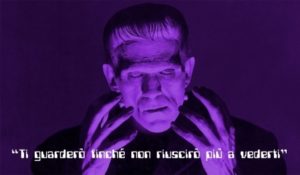
On the same day, the Chinese space agency secretly launches the Kaiju 2 probe.
Mission intent: to reach the edge of a black hole, the threshold where time stops, the light goes out and all matter collapses.
Purpose: to see what is on the other side.
This cutscene is the last message sent by the Kaiju 2 probe two before disappearing inside the black hole.
Francesco Jodice alla II^ Biennale di Yinchuan
il
Francesco Jodice
II^ Yinchuan Biennale, China
From 9 June to 19 September 2018
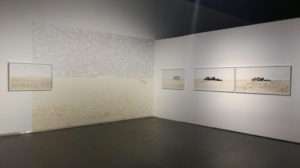
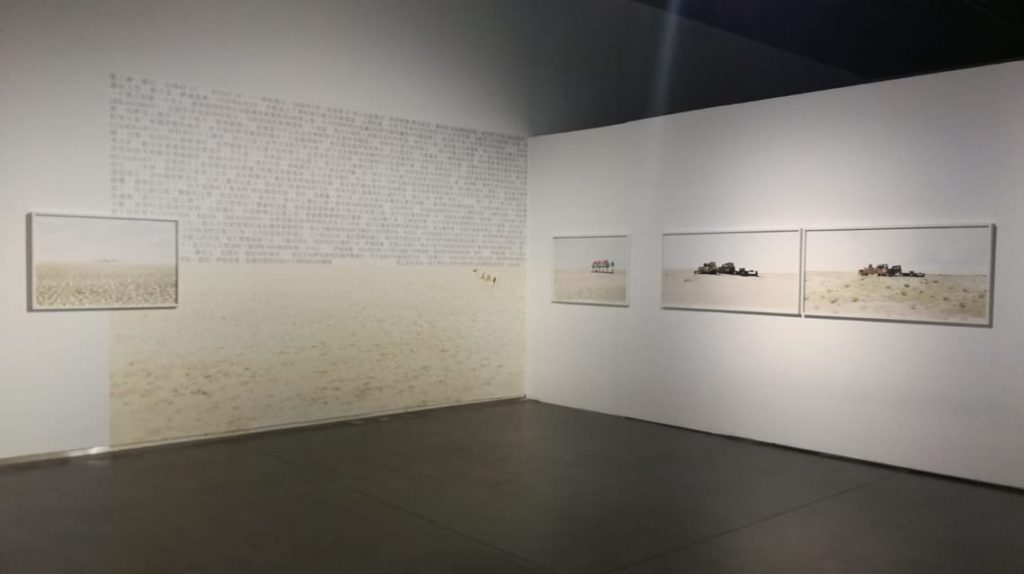
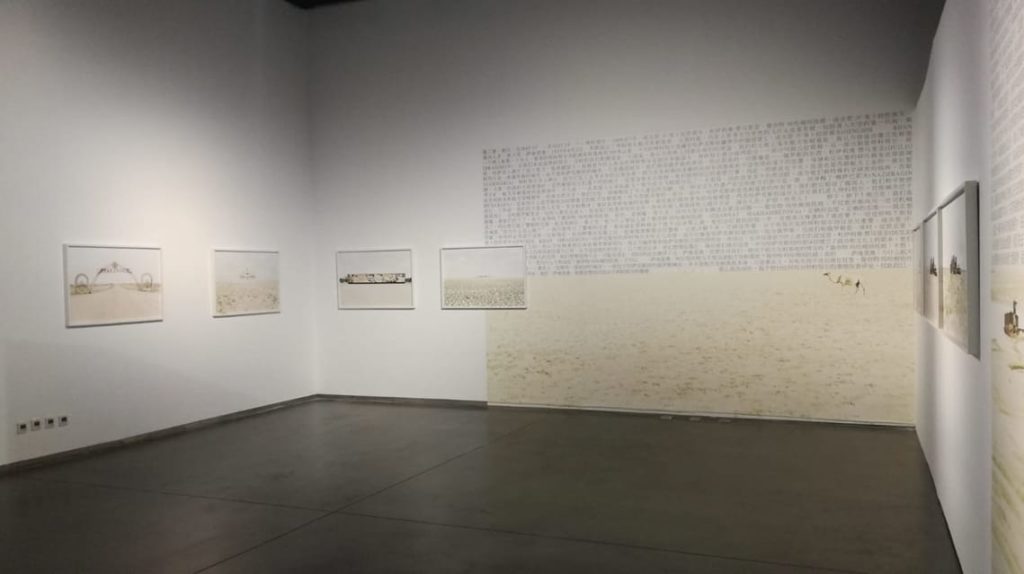
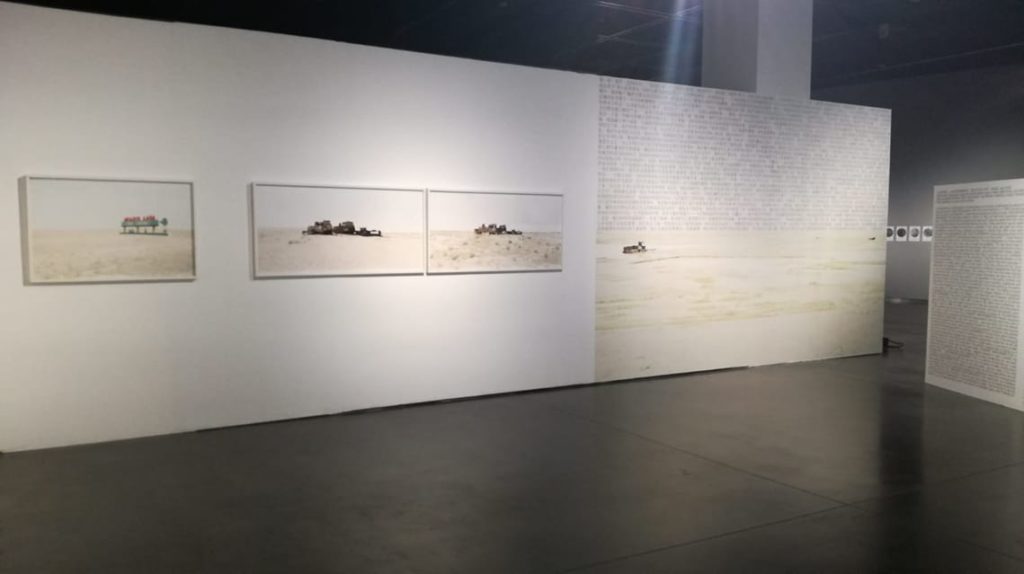
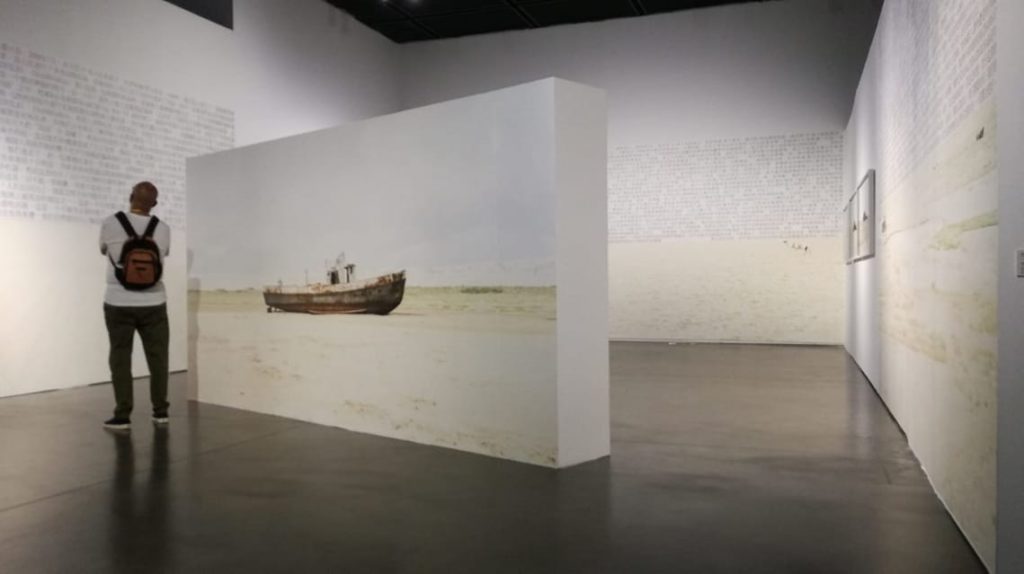
We are happy to share with you some images from the II Biennial of Yinchuan, curated by marco Scotini.
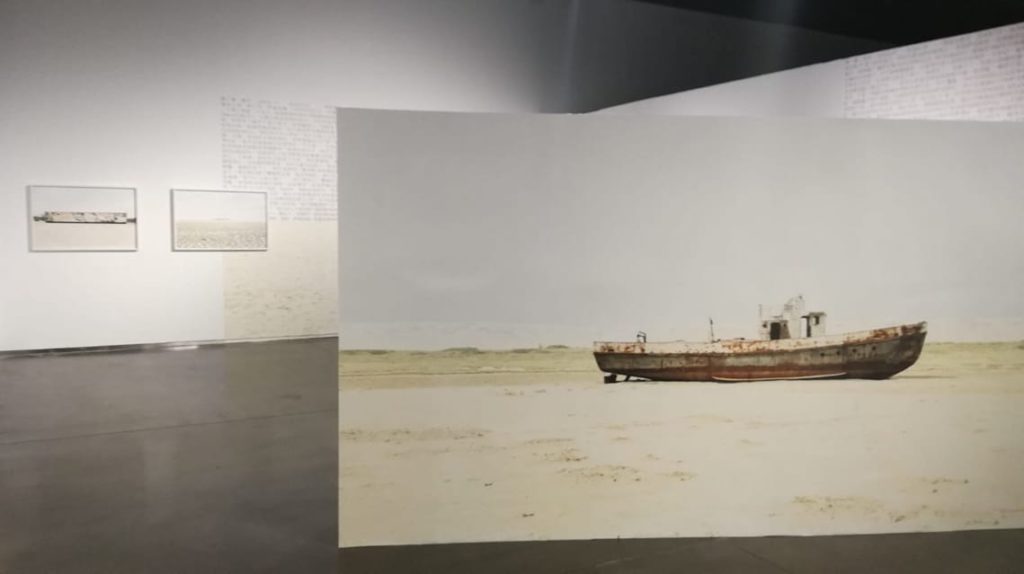
On display, Francesco Jodice with a series of works related to his film Aral Citytellers.
il
Francesco Jodice
Second Yinchuan Biennale
09.06 - 19.09.2018

Francesco Jodice, Aral Citytellers, Kyzylorda, #007, 2008
--------------------------------
Martino Genchi
Ryts Monet
6. Moscow International Biennale for Young Art
07.06 - 31.07.2018

Martino Genchi, Comets Buried Underground, 2016

Ryts Monet, Migrant, 2017
il
Fabio Mauri, Francesco Jodice, Maria Teresa Sartori, Roman Opalka
Museo della Grafica di Pisa, Palazzo Lanfranchi, Pisa
From 22 December 2017 to 11 May 2018
From 22 December 2017 the Museo della Grafica of Pisa hosts the exhibition Time and works, curated by Massimo Melotti and with works by Roman Opalka, Mariateresa Sartori, Andrea Santarlasci, Fabio Mauri, Giorgio Cugno, Jasmina Metwaly, Federico De Leonardis, Claudio Costa, Francesco Jodice and Gianluca and Massimiliano De Serio.
Organized by the Graphic Museum (Municipality of Pisa and University of Pisa) with the patronage of the Tuscany Region and the Scuola Normale Superiore, the exhibition intends to present artists and trends in contemporary art who have deepened their research on the subject of time.
The exhibition stems from the artistic research of Roman Opalka (1931-2011), the artist who most of all tried to define the relationship with time with his work. In 1965 he started his Opalka project 1965/1 - ∞. Throughout his life he has painted a numerical progression on canvases, to which he connects a self-portrait project: he records his own voice pronouncing the newly painted number and takes a picture of himself at the end of each working day. His research on the theme of time ends in 2011 with his death. On display will be presented Détail - Autoportraits and Détail - Cartes de voyage.
By Mariateresa Sartori (1961) the video In G Major / In G Minor is presented, a work on the pervasive power of musical time and on how much this influences not only our feelings but also our visual perception. To do this he uses images taken from Heimat by Edgar Reitz, alternately accompanied by pieces in G major and G minor by Vivaldi and Mozart.
Andrea Santarlasci (1964) invites us to a vision evoked by memory, a vision often played out in a balance between emotionality and conceptuality. The historical experience of the place becomes expressive material that is revealed in the Eterocronia photographic series that opens to a reflection on the present, on the relationship between the individual and memory.
The path continues with the work of Fabio Mauri (1926-2009), the undisputed protagonist of the artistic research of the Sixties and today recognized internationally as a master, of which a selection of historical works will be exhibited. Among these Il TV che piange (1972), a forerunner of his research on the mass media and on the issues of the society of communication. In Mauri's works the temporal dimension develops in the unfolding of ideologies and anthropological knowledge. It is an absolute time in which the relative time of the man of the twentieth century can only be that marked by the collapse of certainties. Mauri questions man and his nature in the light of the recent tragic memory of the war and oppressive ideological practices. Among the works on show Timeless (1995), I was not new (2009), The End (2009) and Screen: Timeless.
Di Giorgio Cugno (1979) presents Caucacola, a work conceived in 2014 in Colombia to investigate the use of the water resources of the Rio Cauca by Coca-Cola and which intends to raise questions about how consumerism and globalization modify the relationship between environment and human action.
The project continues by probing the ground of memory and the event with Jasmina Metwaly (1982), videomaker, political activist, involved in the renewal movement in Arab countries, who makes videos in which Western and Eastern civilizations confront and dialogue. In From Behind the Monument the images of the Arab revolt in Cairo enter into dialogue with the Juvarra architecture of the Castello di Rivoli, home to the Museum of Contemporary Art.
Bearers of memory are also the works of Federico De Leonardis (1938) who recovers work tools and natural finds or artifacts, elements of human making. Having become installations, they release primary forces that redefine the space, bringing out its symbolic caliber or enhancing its specificity. On display is the Horizontal II installation consisting of several works and designed specifically for the exhibition and space of Palazzo Lanfranchi.
Claudio Costa (1942-1995) reconstructs with an anthropological gaze a real work in regress, a path towards the origin through the creation of works that refer to ancient and mythical civilizations. The artist looks at a symbolic world recreated through the use of images, reproductions of masks, ceremonials, rituals and ancestral rites. "Bones" belonging to gigantic prehistoric or mythical animals are discovered or produced in an intersection of linguistic planes. A primary technological "plow" in the history of humanity appears in the guise of a disturbing machine made up of parts of primordial animals.
The video by Francesco Jodice (1967) focuses on time as an absolute and symbolic dimension, considered one of the most interesting among artists experimenting with new expressive solutions in video and photography. Atlante will be presented in the exhibition. For its expressive power, the video captures the temporal dimension as absolute, placing us in front of the inscrutability of its definition. The work has as its fundamental element the sculpture of Atlas around which the artist has mixed images taken from the First World War, from the American slums, from advertising from the 1950s. Jodice combines Eisenhower's farewell speech with a character taken from a film by Carpenter, the revolutionary Angela Davis, the bassist of the Ramones and a cyborg from the first Alien, together as a choir, a critical analysis of the Western system of values.
In closing, a reflection on the time of the unconscious with Gianluca and Massimiliano De Serio (1978), who work with both cinema and visual installations, probing the theme of the other, of identification and of the relationships that time modifies. In the film A Return, trying to overcome a moment of creative crisis, they undergo an experiment in multiple hypnosis. The work focuses its gaze on that normally invisible area which is the unconscious: "We tried to reflect on our artistic and identity crisis, and the only way to do this was not to escape it, but rather to meditate in depth on it and its origins. For this it was necessary to travel through time, at that time apparently unattainable, but in reality inscribed in our memory: the moment of conception, birth ”.
The exhibition itinerary is enriched by the evocative dialogue with some graphic works from the collections of the Department of Prints and Drawings of the University of Pisa, now housed in the Graphic Museum of Palazzo Lanfranchi.
Inauguration
22 December 2017 at 12.00
Graphics Museum
Palazzo Lanfranchi - Lungarno Galilei 9 - 56125 Pisa
Hours: Monday - Sunday, 9.00am - 7.00pm
Telephone: 050 2216060

